Showing posts with label Leadership_in_Digital_&_Collaborative_Learning. Show all posts

Wednesday, 9 December 2015

Growing the Grey Matter (Being Mindful About Mindset)

Week 5 LDC: Developing a Growth Mindset (Leading change)


The Week 5 session at MindLab was about mindset and Carol Dweck’s work.  If you haven’t heard about or read about her theory, it goes like this:

Someone with a fixed mindset doesn’t see that they can improve their intelligence.  “I’m bad at maths because my mother was bad at maths; I’ve always been bad at maths,” is a common expression of this state of being.  You were born this way and that’s that.  Give up now.

Someone with a growth mindset believes that you can change and improve. The brain is flexible and able to grow new connections.  “I’m not so good at maths but I can work at it and improve.” Environment is more important than genes.

In the former, a FAIL is an indication of lack of aptitude.  It’s a reason to stop and give up. It’s about acceptance of the status quo.  In the latter it is punctuated: F.A.I.L. means “first attempt in learning”. It’s about perseverance.

This is demonstrated with a video on experiences with a backwards bike: a bike that operates against how we expect it to work.  Sure enough, after a period of practice, the narrator gets the hang of it.


So, I hear you say, I just need to tell myself I can do it? It would seem so, but I believe there are a few more factors that need to be thrown into help us “fail forward”.

High expectations - I always knew I could succeed academically because those I was surrounded with had a high opinion of my ability. Not everyone needs this to succeed, but my parents and grandparents had been to university so I always thought I would.

Early success - No one ever told me I was below, or well below a standard.  I got lovely written feedback from my first teachers. I can’t remember being given a level or a grade until high school.

A love of competition and challenge - However, I did like being in the top group so did the work when it came to learning multiplication facts or spelling words for those daily tests.

A love of learning - We didn’t have money, but we had books.  And we had a mother who was totally immersed in helping us to learn.  She did things with us.  She went to parent interviews.  She helped with projects.  I still have the old chest of drawers that was used solely as a vertical file of current events material and resources to help us with homework assignments.

Great relationships - My mum was so supportive.  And I had some great teachers who loved learning themselves and created exciting activities that I remember decades later.

I can relate to feeling a failure and not good enough in at least one regard: ball sports.  I’d lived in Jamaica as a child, and came back to New Zealand in standard 4 (Year 5) when my peers were already accomplished at the school sporting codes: netball and softball in those days,  if you were a girl.  Funnily enough, riding a bike was something else I’d never had an opportunity to do, as we had lived on a dirt road and my kitset bike had arrived off the ship without all of the necessary parts.

I was short, plump and not particularly spatially aware.  It could be that my myopia was already apparent.  Or just that I hadn’t had a lot of experience with ball sports.  It wasn’t something that my parents exposed me to.  My teacher used a common method for choosing two teams: nominate the two sportiest kids as captains and get them to take turns at choosing people.

You guessed it: I was always one of the last.  I’ve always felt at a disadvantage in sports and it’s not something I put my all into.  No surprises there.

I did learn to ride a bike, probably because it was more of a solo thing, I could do it at my pace and again, I had a parent to encourage me - and a need - a need to get to school.

A couple of years ago someone shared an amazing video with me.  I’ve spent three days looking for it for this blog post. Maybe this will jog someone’s memory.  It was posted in reaction to National Standards and was the trailer to a documentary about a Nepalese (?) community.

The premise of the movie was this: a society has the power to enable its children to feel like successes or failures through the things it values.  In this particular society, noone had failed an exam, or received a “below the standard.” It made me think.

Mindset is about more than an individual’s beliefs about his or her own learning ability.  It’s about what a culture or a society demonstrates that it values. That’s the mindset that is the most crucial.

See https://www.youtube.com/watch?v=ugsKzJEkTa0 for an overview from +Philippa Nicoll Antipas


Sunday, 22 November 2015

Rejecting Stereotypes and Cliches

Week 3 LDC - Implementing Technology Innovation in the Classroom


1965 classroom at Parklands Elementary


“This week we will look at what should the overall goal of education be, with a focus on building Adaptive Competence. In simple terms, it may be defined as the “capacity to respond” within “bounded parameters” (MindLab course overview, week 3).


A hundred years ago, even fifty years ago, if you look at the photo, students headed off to school to learn.  For most, school was the place where you received information.  The teacher was the font of the knowledge which would open the doors to successful careers, and a life made less boring because you were “well read” and could lift yourself into a better level in the pecking order.

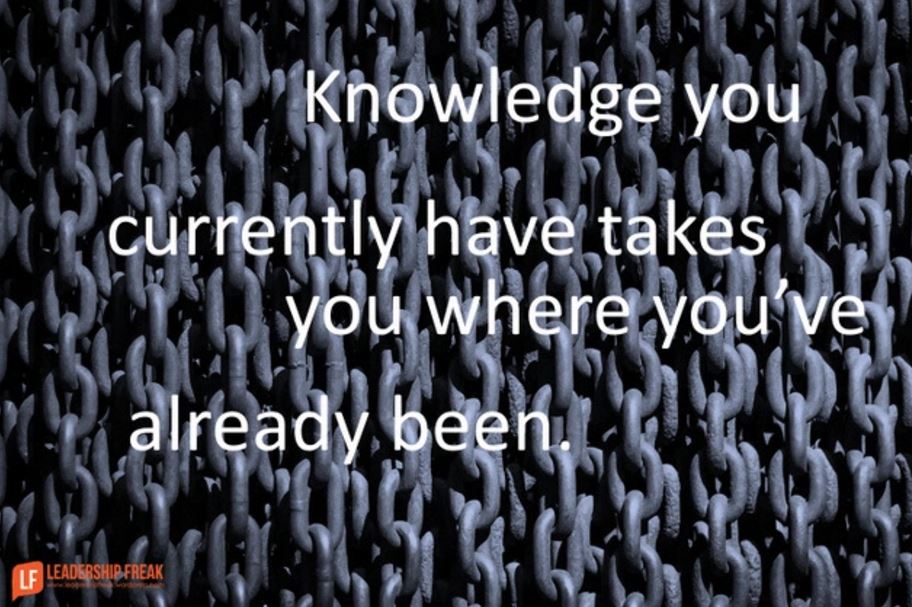
I use cliches on purpose; many are past their shelf life.  Education isn't about filling us up with knowledge. If it’s Googlable, it shouldn't be asked.  It’s about enabling us to use information, create information and problem solve.  And this is going to mean having the whole swag of key competencies, as mentioned last week, to do this effectively.


From the Leadership Freak blog.
We look at careers and what careers our children might aim for.  This is difficult as we can’t really predict what some of these jobs will be. We check out http://tinyurl.com/willarobottakeyourjob to see which jobs might get taken over by robots.  


What is becoming obvious is that our children will need to be entrepreneurial and adaptable.  New jobs will come out of new problems and needs.  I google future occupation predictions and get Thomas Frey’s blog.  Fancy being a water purifier or an impact minimizer? He identifies a whole new skill set too.  


Maybe you could be a limb printer?
Right now I’m impressed by my daughter’s running coach; she only met him face to face at her last ultramarathon, but she pays him ten dollars a week and he sends her a training schedule.  He has a website and he has just started a clothing line.  He can afford to.  He already has a thousand clients. I didn’t ask, but I’m picking that he is still in his twenties.

It’s not just that information is googlable; it’s that our children are used to a whole new way of “doing”.  Just read this article from Popular Mechanics: The Generation That Doesn’t Remember Life Before Smartphones - What It Means To Be A Teenager in 2015.  

Another recommended reading from the New York Times, Technology Changing How students Learn, Teachers Say, talks about the results of a teacher survey on the effect of technology use of students on attention and performance.  


“There is a widespread belief among teachers that students’ constant use of digital technology is hampering their attention spans and ability to persevere in the face of challenging tasks…”


The article admits that the study is subjective and based on teacher opinions. It notes that maybe teacher practice does not fit this “brave new world”:


"...the education system must adjust to better accommodate the way students learn, a point that some teachers brought up in focus groups themselves."


I agree: it is tougher to engage students because they now have access to a large range of distractions. Teachers need to compete with the media rich world because our students are now in a land of plenty.  No longer is the classroom where their eyes are opened.  Teachers need to "jump higher", or rather, enable the students to"jump" higher.  Teachers need to get  students to critique information and its sources, and challenge them with deep questions and wicked problems.


Digital technologies are here, good or bad.  It’s up to us to “engage or enrage”.  At the same time, we need to use them purposefully and examine whether particular applications do more than merely engage.  We need to make sure our students are safe and able to be discerning.


Using an image as trigger on
Aurasma. 
At our workshop we play with a number of augmented reality apps: Aurasma, Quiver, Enchantium and Anatomy 4D .  It’s huge fun, if not sometimes frustrating.  But it’s the frustration of waiting for apps to load and falling off the internet with the number in the room, that makes us question their use tonight. The conversation continues with family at home later.  It’s about using the best tool for the job.


We discuss virtual reality. Is it good for our students to be immersed for hours at a time in Minecraft and similar second life worlds? The pluses and minuses are discussed.  My children immersed themselves in Lego and Barbie worlds for hours, even days at a time. The lack of social skills versus the online collaboration opportunities are debated.


From shrockguide.net
Time to look at the SAMR model.  We need to make sure we are doing more than substituting bells and whistles.  Are we augmenting the task and creating greater challenge?  Modifying? Or can we reinvent the types of challenges we are setting students?


We have a go with a Google map task.  Judge for yourself if we got it right.


The second model we look at is the Technological Pedagogical Content Knowledge (TPACK), “a framework to understand and describe the kinds of knowledge needed by a teacher for effective pedagogical practice in a technology enhanced learning environment” (course overview).
TPACK image (rights free)

Is self education is the gateway to the world? What role will I have as an educator?  The website tells me that I only have a 1% chance of a robot taking my job. I need to make sure I am growing and learning with my students.


That’s why I'm here.


Let's have some new cliches.

- Samuel Goldwyn


Videos: Using AR apps at our MindLabED session


Storify of Week 3 (with thanks to @1MvdS)


Sunday, 15 November 2015

Achieving Flow - Reflective Practice and Key Competencies in Leading

Week 2: Leadership in Digital and Collaborative Learning


This week was all about reflecting on leadership in schools: our own and what we and others experience.


The precourse work involved watching Grant Lichtman’s What 60 Schools Can Tell us About Teaching 21st Century Schools.  I’ve talked to Grant before, on a Google hangout, Twitter and he was one of the keynote speakers at this year’s Ulearn15.


These were some of the points that resonated with me:
  • Schools are not good at innovation. Agreed. After my first few weeks in a senior leadership team, the principal gave me “Who Moved My Cheese?” to read. People - even teachers, lots of teachers - don’t like change!
  • Change is hard.  Probably why teachers don’t like it.
  • Change is uncomfortable. As above. Being uncomfortable is stressful.
  • Lichtman talks about the ideal education ecosystem - adaptive, permeable, self correcting, creative, dynamic, systemic, and the place of the cognitosphere, where everyone has access through a cell phone.
  • We want self evolving learners, so we must become self evolving organisations.  He expounds Dewey: Preparing our students for their future, not our past.” 
  • We must “fan the brushfires of innovation.”

The reading by Wayne Freeth, intrigued me.  In Towards Reconceptualising Leadership: The Implications of the Revised New Zealand Curriculum for School Leaders he talks about a study where he followed a group of school leaders as they implemented the revised New Zealand Curriculum document in 2007.  What struck me most, was that they could not see outside the current silos, and I believe that difficulty is still here.  “Schools are not good at innovation.”


One of the ways we can prepare learners to be self evolving is by embracing the key competencies as leaders. Our course notes and readings entreat us to live these ourselves.  Mary Anne Murphy, on Curriculum Online (Mary Anne Murphy) talks about the need for key competencies in leadership and outlines what this looks like. This isn’t a new idea for me.  It’s already one of my beliefs.  It’s how we move away from a “knowledge as a noun” (finite) education to a “knowledge as a verb” (infinite and growing) way of learning and living.


We filled out a Google form which asks us to list those skills we see as important for life. 
Care of Lynley Schofield from
the Rotorua MindLab sessions.

The course notes for this week then use a similar Google form to get us to use the key competencies to note first our strengths and then areas we need to work on.  Funnily enough, as I reflect, I feel pretty competent about all the key competencies:
Thinking - I love learning and reflecting.
Managing self - Yep.  Never been a problem.  Self motivated and organise myself to get things done.
Using language, symbols and text - I’m word smart. Love communication.  Understand that there are numerous literacies to get a handle on.
Participating and contributing - Why I think online communities for education are so important.  We need to role model being in positive participatory cultures, and role-model and use these scenarios so that our students understand the digital citizenship needed. This is espoused in this week’s readings:
Jenkins, H. (2009). Confronting the challenges of participatory culture. Cambridge, MA: The MIT Press.
Blogging is seen as a way to develop your professional identity in
Hanuscin, D., Cheng, Y., Rebello, C., Sinha, S., & Muslu, N. (2014). The Affordances of Blogging As a Practice to Support Ninth-Grade Science Teachers' Identity Development as Leaders. Journal Of Teacher Education, 65(3), 207-222. http://dx.doi.org/10.1177/0022487113519475

Yay. I'm good with that. Blogging and microblogging (Twitter) have become my natural environments.  I'm proud to say that I have a wide professional learning network.  Global even.  
Relating with others - The absolutely necessary competency for innovation to work today.  Relational trust is needed for people to be able to move forward with innovation.  Trust allows the development of a shared vision.  Trust allows the development of flow, that mindset when work becomes less of a chore because you are working on something you are passionate about.
I don’t think I’m weak in this competency, but it is one I need to keep working on.  I think we all do.  As Grant Lichtman says, “change is hard.”  Relationship building takes time and effort because it’s rare that we get the opportunity to work with a group of people who all share the same ideas and purpose.
How might teachers’ strengths in developing capabilities in thinking, using language, symbols and texts, managing self, relating to others, and participating and contributing, be recognised and celebrated?  
This looks a lot like the well oiled wheel of distributed leadership, where all staff have a voice in vision creating and decision making.  Relational trust is important in order that there is flow.  The wheels work together because the destination - or lack of a single destination is understood and agreed on. The results of flow usually are self fulfilling because everything is negotiated.  This works across schools too.  Where collaboration is happening, student transitions are smoother.
How might students’ capabilities in thinking, using language, symbols, and texts, managing self, relating to others, and participating and contributing, be recognised and celebrated?
I looked at the statement above and replace “staff” with “students.” Students know their pathways which are negotiated and are working because they are passionate about where they are going. Teachers facilitate the development of particular skills in “just in time” learning scenarios so that students can access what they need to remain in flow.  The outcome is self rewarding.
“Mate, you’re dreaming.”  I don’t think so.  Change is hard, but I do know school leaders who are working very hard to achieve this “flow”.  And there’s nothing wrong with having dreams and aspirations.


Do you live these - or at least aspire to?
From: http://visible-learning.org/2014/08/john-hattie-mind-frames-teachers/


Tuesday, 10 November 2015

Food for Thought

So here we were, thinking about knowledge as part of one of the course strands for the Mind Lab course, Week 1: Thought Leadership and Epistemology.  Not an easy task I must say, when you are struggling at the end of a long day to keep thinking, well aware that your brain is crying out for some rest and nutrition!

We explore knowledge; is it, as our ancestors believed, a belief based on believing it is what we know? (Work that one out.)  Or is it empirical and experiential: I see and do it therefore I know it.
Kent Lofgren helps us out, and I admit I've had to look at this again.


So what do we think knowledge is? The members of our table all look at each other and because we are teachers and we are familiar with the tools and process, we each grab a felt pen and start our brainstorm.  It's a rich discussion and everyone participates. No wall flowers here!

The playdoh comes out. Can we make a physical representation?  Someone starts to roll worms and we start interconnecting the worms in a squiggly maze of spaghetti which we think is much like a brain.

Now a group task.  You have, people, thirty minutes to plan, execute and upload a video representation of what you think knowledge is.

A moment of stunned silence then we're off again. The elements of our chart are recited as worm after worm mounds in the centre of our drawing: facts, cultural input, sensory input... Hey, this is pretty good.  Let's repeat it and see if we can film it in one take.  Maybe two, after Lynley asks us a question in the middle of our film.  Whoops.

It's a bit noisy, and at 2.42 minutes, not the carefully crafted and edited minute that we had envisaged. I've got the ipad and struggle with the realisation that I haven't actually used imovie and start to panic.  We decide to upload it to Youtube and to the moodle site as is.


Interesting.  We put students in this sort of stress all the time.  Group dynamics, resources and skill levels are tested.

But is it wrong?  Should we have had more carefully scaffolded or supportive instructions? Maybe, but maybe not.  We need students who can recognise problems and come up with solutions themselves.

I test this at school this week.  A group of students want to make and sell jelly cups as a fundraiser.  It becomes obvious that they haven't planned it out.  Do I help or do I just ask questions to help them reflect? They look to me several times to "save" them.  I resist.  I listen. I watch.  I've done the right thing.  They learn far more by having to think and reflect for themselves.

Later I see Ella.  She is helping to organise a game on the field this lunch time, but is walking around the eating area.  "I decided I better advertise Mrs Hyde," she says. "I found out from the jelly cups experience that I need to let people know what is going on."

Food for thought.