Showing posts with label RTC6. Show all posts

Sunday, 19 June 2016

Crossing Boundaries*


Week 31 - My seventh post for Applied Practice in Context:  My interdisciplinary connection map


I believe in the NZ Curriculum. It is a forward thinking document that encompasses future thinking, local context, and learners not only as individuals but as citizens of the world.

Which connections will I address first?

My literature review was about self regulated learning (SRL) because we are now trying to develop innovative learning practices to meet these aims. It’s time for a shift from passive learning (or lack of learning) of reluctant school goers, to active, owned learning. While I see all the connections on my diagram as intrinsic to the whole, I need to talk about two that are near future goals. Embracing digital technologies is one of the connections from the map. Enhancing what we do in positive behaviour for learning, is another.
I listened to a webinar this morning: a chat with Grant Lichtman, author of “#Edjourney: A Roadmap to the Future of Education”. He talked about the need to reinvent the current school model and that many schools are behind the times in thinking about the world their students are growing up in.
Our students have been born this century, when the world wide web and computers were already very much in use.  They don’t know a time without computers and don’t understand teacher hesitation in using available technologies.  I use my smartphone, ipad and laptop for research, collaboration, connection, and publication; and I want instant results because I can have instant results.  My students have similar expectations.
Besides teacher reluctance,the other issue is available funding.  I do my best to advocate, educate, assist and innovate wherever I can.  I’ve got our executive officer applying to trusts and our technician installing Chromixium into some old laptops that have passed their use by date.
Positive Behaviour for Learning is a values programme that our school has been involved with for seven years.  Like all programmes, there comes a point where you inject more time and energy - and even funds - into it, or you start over. At the start we gathered community, teacher and student voice on what our key values should be and developed the statement: “Mokoia is a community which values respect, relationships and honesty for learning.”  Reading Hipkins et al’s “Key Competencies for the Future” has made me think more deeply about how we view these values and what attitudes our students really hold.  I am acutely aware of what we call cultural responsiveness and whether we can embrace what Hipkins et al call the range of “discourses” we encounter and need to be comfortable with; can we adapt and appreciate cultural values that differ from those we are born into? Are we good digital citizens? Are we respecting our environment?

Working in an interdisciplinary environment

We now understand that we learn when two conditions are met:
Firstly, we want to learn. We have an authentic reason for taking on board new knowledge or skills.
Secondly, we can make connections with our previous knowledge. We make better sense of the new learning. We get that “aha!” moment.
It makes sense then that learning does not happen readily when knowledge and skills are taught in isolation.  It’s why we realise that we need to look at the authentic use of literacy and numeracy across the curriculum when we decide how literate or numeric a learner is. Can they select from their knowledge and skills to solve problems? Real life problems usually involve a range of disciplines or learning areas, and we need to be able to select appropriately.  Life events do not occur in siloed subject areas, and we are realising that we need to give learners authentic situations to practice with.
However, as our class reading emphasises, each discipline has its particular literacy.  We depend on expert knowledge for some problems and situations. We depend on the development of that expertise too, so it’s important that our learners are exposed to the full range of disciplines. You never know when your class harbours the next Einstein. Take a look at this:

The education model that most of us are familiar needs to change to ensure we have engaged learners prepared to solve today’s issues with today’s tools, and able to adapt and learn for the issues of tomorrow.  It seems clear that we need to engage our learners in authentic situations and an interdisciplinary model is the one that fits best.
* "creating something new by crossing boundaries" - definition of "interdisciplinary" from https://en.wikipedia.org/wiki/Interdisciplinarity

References

Hipkins, R., Bolstad, R., Boyd, S., & McDowall, S. (2014). Key competencies for the future. New Zealand Council for Educational Research (NZCER) Press.
Jones, C.(2009). Interdisciplinary approach - Advantages, disadvantages, and the future benefits of interdisciplinary studies. ESSAI, 7(26), 76-81. Retrieved from http://dc.cod.edu/cgi/viewcontent.cgi?article=1121&context=essai
Lacoe Edu (2014, Oct 24) Interdisciplinary Learning [video file]. Retrieved from https://www.youtube.com/watch?v=cA564RIlhME
Lichtman, G. (2014). # EdJourney: A roadmap to the future of education. John Wiley & Sons.
Mathison,S.. & Freeman, M.(1997). The logic of interdisciplinary studies. Presented at the Annual Meeting of the American Educational Research Association, Chicago, 1997. Retrieved from http://www.albany.edu/cela/reports/mathisonlogic12004.pdf
TEDx Talks (2001, April 6). TEDxBYU - David Wiley - An interdisciplinary path to innovation. [video file].Retrieved from https://www.youtube.com/watch?v=5ytjMDongp4

TEDx Talks (2015, March). TED2015 - Neri Oxman - Design at the intersection of technology and biology. [video file].Retrieved from http://www.ted.com/talks/neri_oxman_design_at_the_intersection_of_technology_and_biology?utm_source=twitter.com&utm_medium=social&utm_campaign=tedspread


Wednesday, 9 December 2015

Growing the Grey Matter (Being Mindful About Mindset)

Week 5 LDC: Developing a Growth Mindset (Leading change)


The Week 5 session at MindLab was about mindset and Carol Dweck’s work.  If you haven’t heard about or read about her theory, it goes like this:

Someone with a fixed mindset doesn’t see that they can improve their intelligence.  “I’m bad at maths because my mother was bad at maths; I’ve always been bad at maths,” is a common expression of this state of being.  You were born this way and that’s that.  Give up now.

Someone with a growth mindset believes that you can change and improve. The brain is flexible and able to grow new connections.  “I’m not so good at maths but I can work at it and improve.” Environment is more important than genes.

In the former, a FAIL is an indication of lack of aptitude.  It’s a reason to stop and give up. It’s about acceptance of the status quo.  In the latter it is punctuated: F.A.I.L. means “first attempt in learning”. It’s about perseverance.

This is demonstrated with a video on experiences with a backwards bike: a bike that operates against how we expect it to work.  Sure enough, after a period of practice, the narrator gets the hang of it.


So, I hear you say, I just need to tell myself I can do it? It would seem so, but I believe there are a few more factors that need to be thrown into help us “fail forward”.

High expectations - I always knew I could succeed academically because those I was surrounded with had a high opinion of my ability. Not everyone needs this to succeed, but my parents and grandparents had been to university so I always thought I would.

Early success - No one ever told me I was below, or well below a standard.  I got lovely written feedback from my first teachers. I can’t remember being given a level or a grade until high school.

A love of competition and challenge - However, I did like being in the top group so did the work when it came to learning multiplication facts or spelling words for those daily tests.

A love of learning - We didn’t have money, but we had books.  And we had a mother who was totally immersed in helping us to learn.  She did things with us.  She went to parent interviews.  She helped with projects.  I still have the old chest of drawers that was used solely as a vertical file of current events material and resources to help us with homework assignments.

Great relationships - My mum was so supportive.  And I had some great teachers who loved learning themselves and created exciting activities that I remember decades later.

I can relate to feeling a failure and not good enough in at least one regard: ball sports.  I’d lived in Jamaica as a child, and came back to New Zealand in standard 4 (Year 5) when my peers were already accomplished at the school sporting codes: netball and softball in those days,  if you were a girl.  Funnily enough, riding a bike was something else I’d never had an opportunity to do, as we had lived on a dirt road and my kitset bike had arrived off the ship without all of the necessary parts.

I was short, plump and not particularly spatially aware.  It could be that my myopia was already apparent.  Or just that I hadn’t had a lot of experience with ball sports.  It wasn’t something that my parents exposed me to.  My teacher used a common method for choosing two teams: nominate the two sportiest kids as captains and get them to take turns at choosing people.

You guessed it: I was always one of the last.  I’ve always felt at a disadvantage in sports and it’s not something I put my all into.  No surprises there.

I did learn to ride a bike, probably because it was more of a solo thing, I could do it at my pace and again, I had a parent to encourage me - and a need - a need to get to school.

A couple of years ago someone shared an amazing video with me.  I’ve spent three days looking for it for this blog post. Maybe this will jog someone’s memory.  It was posted in reaction to National Standards and was the trailer to a documentary about a Nepalese (?) community.

The premise of the movie was this: a society has the power to enable its children to feel like successes or failures through the things it values.  In this particular society, noone had failed an exam, or received a “below the standard.” It made me think.

Mindset is about more than an individual’s beliefs about his or her own learning ability.  It’s about what a culture or a society demonstrates that it values. That’s the mindset that is the most crucial.

See https://www.youtube.com/watch?v=ugsKzJEkTa0 for an overview from +Philippa Nicoll Antipas


Sunday, 22 November 2015

Rejecting Stereotypes and Cliches

Week 3 LDC - Implementing Technology Innovation in the Classroom


1965 classroom at Parklands Elementary


“This week we will look at what should the overall goal of education be, with a focus on building Adaptive Competence. In simple terms, it may be defined as the “capacity to respond” within “bounded parameters” (MindLab course overview, week 3).


A hundred years ago, even fifty years ago, if you look at the photo, students headed off to school to learn.  For most, school was the place where you received information.  The teacher was the font of the knowledge which would open the doors to successful careers, and a life made less boring because you were “well read” and could lift yourself into a better level in the pecking order.

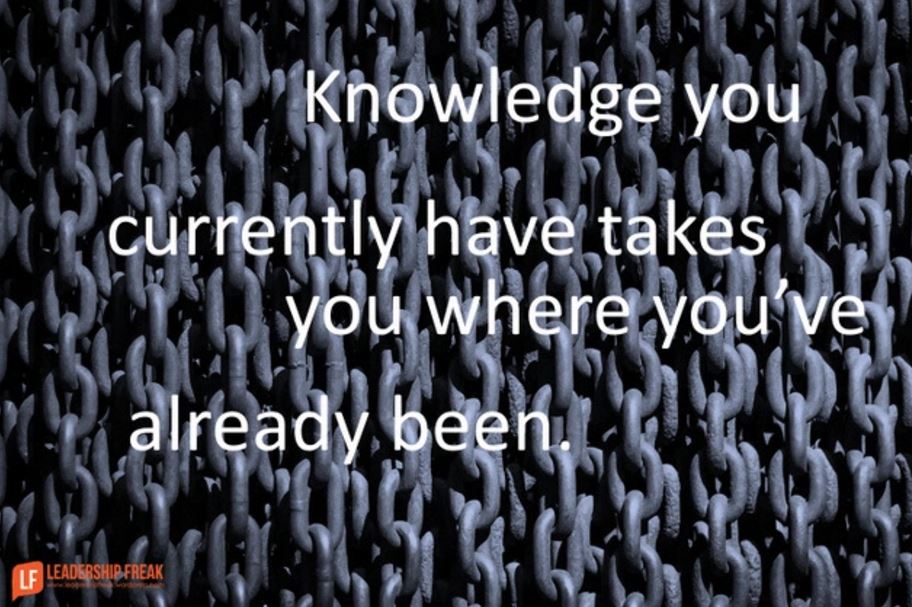
I use cliches on purpose; many are past their shelf life.  Education isn't about filling us up with knowledge. If it’s Googlable, it shouldn't be asked.  It’s about enabling us to use information, create information and problem solve.  And this is going to mean having the whole swag of key competencies, as mentioned last week, to do this effectively.


From the Leadership Freak blog.
We look at careers and what careers our children might aim for.  This is difficult as we can’t really predict what some of these jobs will be. We check out http://tinyurl.com/willarobottakeyourjob to see which jobs might get taken over by robots.  


What is becoming obvious is that our children will need to be entrepreneurial and adaptable.  New jobs will come out of new problems and needs.  I google future occupation predictions and get Thomas Frey’s blog.  Fancy being a water purifier or an impact minimizer? He identifies a whole new skill set too.  


Maybe you could be a limb printer?
Right now I’m impressed by my daughter’s running coach; she only met him face to face at her last ultramarathon, but she pays him ten dollars a week and he sends her a training schedule.  He has a website and he has just started a clothing line.  He can afford to.  He already has a thousand clients. I didn’t ask, but I’m picking that he is still in his twenties.

It’s not just that information is googlable; it’s that our children are used to a whole new way of “doing”.  Just read this article from Popular Mechanics: The Generation That Doesn’t Remember Life Before Smartphones - What It Means To Be A Teenager in 2015.  

Another recommended reading from the New York Times, Technology Changing How students Learn, Teachers Say, talks about the results of a teacher survey on the effect of technology use of students on attention and performance.  


“There is a widespread belief among teachers that students’ constant use of digital technology is hampering their attention spans and ability to persevere in the face of challenging tasks…”


The article admits that the study is subjective and based on teacher opinions. It notes that maybe teacher practice does not fit this “brave new world”:


"...the education system must adjust to better accommodate the way students learn, a point that some teachers brought up in focus groups themselves."


I agree: it is tougher to engage students because they now have access to a large range of distractions. Teachers need to compete with the media rich world because our students are now in a land of plenty.  No longer is the classroom where their eyes are opened.  Teachers need to "jump higher", or rather, enable the students to"jump" higher.  Teachers need to get  students to critique information and its sources, and challenge them with deep questions and wicked problems.


Digital technologies are here, good or bad.  It’s up to us to “engage or enrage”.  At the same time, we need to use them purposefully and examine whether particular applications do more than merely engage.  We need to make sure our students are safe and able to be discerning.


Using an image as trigger on
Aurasma. 
At our workshop we play with a number of augmented reality apps: Aurasma, Quiver, Enchantium and Anatomy 4D .  It’s huge fun, if not sometimes frustrating.  But it’s the frustration of waiting for apps to load and falling off the internet with the number in the room, that makes us question their use tonight. The conversation continues with family at home later.  It’s about using the best tool for the job.


We discuss virtual reality. Is it good for our students to be immersed for hours at a time in Minecraft and similar second life worlds? The pluses and minuses are discussed.  My children immersed themselves in Lego and Barbie worlds for hours, even days at a time. The lack of social skills versus the online collaboration opportunities are debated.


From shrockguide.net
Time to look at the SAMR model.  We need to make sure we are doing more than substituting bells and whistles.  Are we augmenting the task and creating greater challenge?  Modifying? Or can we reinvent the types of challenges we are setting students?


We have a go with a Google map task.  Judge for yourself if we got it right.


The second model we look at is the Technological Pedagogical Content Knowledge (TPACK), “a framework to understand and describe the kinds of knowledge needed by a teacher for effective pedagogical practice in a technology enhanced learning environment” (course overview).
TPACK image (rights free)

Is self education is the gateway to the world? What role will I have as an educator?  The website tells me that I only have a 1% chance of a robot taking my job. I need to make sure I am growing and learning with my students.


That’s why I'm here.


Let's have some new cliches.

- Samuel Goldwyn


Videos: Using AR apps at our MindLabED session


Storify of Week 3 (with thanks to @1MvdS)


Saturday, 18 July 2015

More Than A Bean Bag

I joined a number of educators at a great day hosted at Wairakei School in Taupo, and run by Daniel Birch, Lisa Squire and Shayn Afu from Hobsonville Primary School.
Much of what we experienced was to do with the vision and values behind their journey. It made me question how far we have unpacked our own school vision statements and values with all the shareholders,
Here is a storify of the collected understandings from the twiducators in the room. There are a lot of links to follow up later. Enjoy - as we did.


Monday, 27 October 2014

Frogs and Snails and Puppy Dog Tales

Image attribution
In it there is a spaceship
and a project
for doing away with piano lessons.

And there is
Noah's ark,
which shall be first.

And there is
an entirely new bird,
and entirely new hare,
an entirely new bumble-bee.

There is a river
that flows upwards.

There is a multiplication table.

There is anti-matter.

And it just cannot be trimmed.
I believe that only what cannot be trimmed
is a head.

There is much promise in the circumstance that so many people have heads.

MIROSLAV HOLUB

Recently my middle daughter, now an adult living away from home, admitted that one summer she had an accident which she hid from us, her parents.

We live on a long straight suburban road, just below the bit where the uphill incline starts to steepen. With a group of friends, predominantly boys, she took the challenge and long-boarded down from the top.  She's always been our "Xena, Warrior Princess," taller and stronger than her sisters, and always able to beat the boys in any sporting event at primary level.

But this time she came off, knocked herself out and skinned her arm from shoulder to wrist.  With a national rowing competition coming up, she decided to hide the whole event from her family, and suffered for a number of weeks under long sleeves and from the unknowing knocks and bumps of her unsuspecting family members.

While the story was told, the other kids in the room only laughed knowingly.  And while my husband rolled his eyes, his mother too, can recount the stories of her four children on their farm, three boys, including lucky car accidents, spotlighting and running over neighbourhood roofs.

It's what kids do.  And especially boys. It's about that risk and the fellowship of risk that belongs in childhood...which goes on until the mid twenties for some.

And my reaction mirrors the reaction of many teachers of writing when they see the "blood and guts" or toilet humour in the writing of boys. Really? Did you have to do that?

Ralph Fletcher, a father of four boys and a teacher of writing, addresses my concerns in his highly readable book, "Boy Writers."

He reminds me that the life of boys is very different from the life of middle aged female teachers.  I know that my students enjoy listening to the weird and wonderful writing of authors like Paul Jennings:

Finally it is time for bed. Cynthia changes into her nightie in the bathroom and then joins me in the bedroom. 'The cat's on my bed,' she says. 'But it doesn't matter. I like cats.' She pulls back the blankets.

And screams. 'Aargh. Cat poo. Filthy cat poo on my pillow.' She yells and yells and yells.

Just then Dad bursts into the room with a silly grin on his face. He goes over and looks at the brown object on the pillow. 'Don't let a little thing like that worry you,' he says. He picks it up and pops it into his mouth. But this time he does not give a grin. His face freezes over.

'Are you looking for this?' I say.

I hold up the bit of plastic poo that Dad had hidden under the blankets earlier that night.
(from 'Funniest Stories", 2005)

Do I accept that the boys in my class might also want to write like this?

In a series of short chapters, ideal for after planning quick reads, Fletcher outlines his findings, anecdotes and reflections, ending each with a list of "What Can I Do in My Classroom?"

Ideas he covers include:

  • giving boys choice
  • accepting their humour
  • understanding their unique voice
  • the place of conversation
  • handwriting and fine motor skills
  • why violence has a place
  • relationships
  • why fun is important

He leaves us with four main points to better nurture and support struggling boy writers.
1. Just let them write
2. Take the long view - you want them to want to be writers.
3. Consider pleasure.  Is it fun?
4. Think relationships. "We're not teaching writing - we're teaching writers."

As a mother of girls, this is a book I need to put in my kete along with Celia Lashlie's excellent text, "He'll Be OK - Growing Gorgeous Boys into Good Men"(2007).

It's a text I'll be buying several more copies of for our teachers as they launch into the second year of an inquiry into improving writing for boys and "reclaiming their voices."


Related blog posts:

Sunday, 12 October 2014

Embracing the Tigger in Us - Reflections on #Ulearn14


I love how I feel after Ulearn conferences and this has been the best so far.  It's taken me two days to sort, chew, digest, and ruminate over what are my major "take homes" and what I will look at first on Monday.  So here goes:

1. Friendship

Last year I met a lot of Twitter frequenters face to face at #Ulearn13 as I did at the #Edchatnz conference.  This was a chance to get together again and there were still new people to link with for the first time.  I got asked to say a few words at the Twitter Dinner on Wednesday night and these really encapsulate the way I feel about the educators I've met through Twitter: we get to know each person by their contents before we see the cover and we appreciate that we are all on the same page. (Someone tweeted it out but I can't for the life of me find it in the stream!)

I opened my house to fellow tweeps as others have done for me, especially +Caroline Bush in Auckland. our fellowship allows us to support each other and if it means we can go to more events more frequently, then great.  The social aspect is an important part of these conferences.  It's a chance to mull over ideas in a safe and comfortable environment.  It's that whole dynamic of having all your needs met.  We all need acceptance and to feel valued by our peers.  I genuinely get joy from all the friendships.  It blows me away that +Dean McKenzie and @dwenmouth found family, friend and school connections after a few minutes talking.  I loved hanging out with @nlouwrens and @mattynichol and to see them on the Saturday when they were waiting for their flights.  It meant a lot to be able to ensure that +Craig Kemp was welcomed and felt included by his Kiwi colleagues.  These are but a few of the experiences.

2. Connectedness

Friendship is part of this but it is more.  It's being part of the collective of passionate educators all
dedicated to lifelong learning.  It gave me huge satisfaction to see the teachers from my own school get how powerful this is.  That the Twitter stream is filling up with their tweets gives me enormous satisfaction and will need nurturing.  There is a definite buzz when you are "followed" or "retweeted" that makes you feel you are on the right track.

https://twitter.com/ShiftParadigm/status/
520970694432411648/photo/1
I love that this amazing group of women is now excited and energised for term 4 rather than regretting that the holidays have drawn to a close.  They have purpose.  They are excited by Universal Design for Learning and @KatieNovacUDL.  I've challenged them to present the inquiry that they are now purposefully planning and present it at #Ulearn15.  I am going to request that the Board plans to send the whole staff next year.

3. Akonga

I loved that we see we are all learners together.  Thirteen year old Thomas did an amazing job at our Minecraft Magic breakout.  It was his video, his ownership of the narration, his understanding of the programme.  Empowerment.  Tuakana teina.  The "aha moment" that being talented is not about being "below" the National Standard for writing.  His communication skills were exemplary.

Our kapahaka roopu blew everyone away with their Thursday morning performance to the 1700 strong crowd.  They were leaders, talented, strong.  I don't think they realise how special they were.  It is my job to make sure that they take this experience and run with it.

4. Learning with "e's"

I admit it.  I was self conscious about my over tweeting.  Didn't want to look like I had a problem and didn't want to cheese anyone off.  But I wasn't going to use pen and paper.  "E"-devices are now my way of life.

I tried to embrace the Google docs but I had lots of connectivity problems with those.  Something to do with too many folk trying to share, it was suggested.

So after a sigh, I went back to Twitter.  Why I had I left this? I love Twitter! I love 140 word summaries.  I love the interaction with others as I reflect.  Definitely a learning moment which I see others like +Leigh Hynes share; here's her blogpost.

My presenter lanyard takes its place.
I mentioned connectedness; it's also the collaboration we can have from "e"_platforms. I was able to plan and present a breakout with a group of educators I met online.  We planned with a Google Doc, created a Google slide and talked on a Google hangout.  It's "e" for empowering!

I read a great blogpost this morning about the amazing group of "e" for educators that are the "efellows".  I'm proud of the fact that I know so many of them this year and in 2015.  And it's all about "e" for education these days.  Some teachers and schools still think this a geeky conference for computer geeks (as if that is unpalatable) and they couldn't be more wrong.  Ulearn is all about good practice and real learning for all.

storify

Not least is excitement! I loved this conversation this afternoon:


5. Embracing My Tiggerness

I need to be me.  I Tweet. I shriek. I hug. I laugh.  I love learning.  And no such thing as being too-Tiggerish, @fuse711!

I loved that I saw it and heard it in +Tom Barrett 's session and in  +Steve Mouldey 's session.  He also refers to it as being an "excited puppy."

https://www.goodreads.com/work/quotes/
1225592-winnie-the-pooh
It's not a persona - my own persona - that I embrace at school.  Interestingly, the feedback I got from my colleagues was that they liked this persona better.  So that is a huge take home for me.

6. Extended and Disrupted Thinking

Unless we get out there, we don't see where pedagogy is going.  As educators we need to constantly reflect on our practice and it is an honour to hear the ideas of others.  Just as modern learning spaces are about knocking down walls, modern learning practice is about knocking down barriers to learning.  What follows is a list of the keynotes and breakouts I attended and storifies from my connected educators!


  • Breakout One - Presentation : Modern Learning Environments: where learning takes place - +Mark Osborne 

"This session will explore much of the research into where learning best takes place. We will look at the drivers that are seeing many schools re-examine their physical learning environments as well as the research into their effectiveness. In particular, this session will look at ‘the site’ (your school’s location and its relationship to your community), ‘the structure’ (what size, shape and configuration the building should be) and ‘the stuff’ (furniture, fittings, equipment and technology). We'll also look at a number of case-studies of effective modern learning environments." 


Mark took us on a journey through the different paradigms of learning.  He looked at how our lives have been affected by technological change and why that should mean a change in learning practice.  He looked at schools such as Ngatea with Neil Fraser and Karla Hull; I feel really privileged to have been there and to consider them my friends!

From Nick Mason +fuse711 - http://fuse711.blogspot.co.nz/2014/10/modern-learning-environments-where.html


  • Breakout Two - Presentation : Teaching and Learning in a Community of Thinking - Yoram Harpaz


"This workshop will initiate the participants to the processes of teaching and learning in a community of thinking – a framework that my colleagues and I created and facilitated in Israel and elsewhere. The theoretical background of the community of thinking is based on five “atomic pictures” – of learning, teaching, knowledge, mind and educational aims. The practice of the community of thinking is based on three stages: fertile question, inquiry, and team and communal concluding performances. The workshop will facilitate the participants in posing fertile questions, guiding research, and producing concluding performances."

I wanted to go to this because the Community of Thinking is our Problem based learning Model.  Some clarification for me.


  • Breakout Three - NoTosh : Design thinking for innovation and inquiry - +Tom Barrett 


"Working together we will use the design thinking process to immerse ourselves in some of the chunkiest issues crowdsourced from you and the wider education community. We will define the real problems, generate new ideas and even begin prototyping some of our thinking. In addition we will begin to consider how this creative inquiry can be used in the classroom with our learners. Yes all within 75 minutes! Brains-on, Hands-on!"

My biggest take home was embracing my Tigger side!  Loved the collaborative approach and structure of design thinking and will add more as I digest it.

What is design thinking?

Minecraft Madness, Trailblazing and hacking other Minecraft tweets from #ulearn14 


  • Breakout Five A - Taster :: "Modern learning started in libraries" - so how do you create a future focussed library? - +Georgi de Stigter 


"The ever changing landscape of education has left one thing unchanged: the role of a school library. Even in a digital age students still actively seek out a quiet, open and non-threatening space where they can find what they need, when they need it. But libraries are sometimes full of restrictions around security, limited internet access, and laminated rule cards, and this isn’t really modern or future focused. Once the doors close at the end of the day, that’s it, opportunity to visit over. A future proof library on the other hand, is the complete opposite. This presentation will cover the journey of the recreation of the library at Hobsonville Point Secondary School, a modern learning environment opened this year. It will highlight the process of developing a vision and executing it, whilst discussing successes and learning opportunities that arose along the way.  If you are interested in re-envisioning your library for the future, please come along and find out more."

I've visited Hobsonville Point schools but didn't get to the library! It was great to see Georgi's journey.  The library as a space is evolving.  It's a topic much at the front of my mind right now.


  • Breakout Five : Making the most of your Google Drive using apps, add-ons and extensions - +Leigh Hynes 


"An introduction to some much loved add-ons, extensions and apps for Drive and Chrome that you can make work for learning in your class.  Learn how to use and get your students using these extras in Google Drive and on Chrome."

I arrived half way through.  Must get back to Leigh's presentation! Always useful material.  I asked her to come and support me at school with GAFE.

  • Breakout Six - Presentation : Creativity is not just for the arts

“This isn’t art, why are you asking me to be creative/draw/make something?”

"In all subject areas now we are looking for students to develop innovative ideas. If we want students to come up with innovative or creative ideas we need them to practice being creative. Build their creative confidence. As a geography and social sciences teacher, my journey to developing students creativity has seen me bring all kinds of tools to the classroom with me: chalk, post-its, pipe cleaners, tennis balls, boxes, QR codes, multiple devices, robots... All in the aim of getting students to think more creatively. If you are looking to increase your students’ abilities and confidence in being creative, then this may be the session for you!"

Leanne's storify


More Ulearn14 Storifies:


+Kirstin Anderson-McGhie  My Ulearn Related Tweets ; Things to remember from Ulearn14

+Marnel van der Spuy - Presentation Ulearn 2014

+Alex Le Long  - ULearn14 - It Truly Was the 'Mother of all e-Learning Conferences

+Kassey Downard  - #Ulearn day 1     #Ulearn day 2      #Ulearn day 3

Vanessa Cannon - Ulearn14 Reflections

+Tamara Yuill Proctor - Ulearn Tweets

+Pam Hook - Bridget Casse - SOLO Taxonomy in the Early Years

Jenni Markotsis - Ulearn - I Learnt

@jeanettem1 - Reflecting on Ulearn2014

Thursday, 2 October 2014

(Modern) Learning Environments

"She (was) a Mod" - but not today.
https://www.flickr.com/photos/hartman
045/4089843022/

I'll be honest. It's taken me a while to explore this topic, for two reasons:

I took it literally. I was in an existing, older environment, with no power over changing "how we do things here."

The term grates on me. It's another bit of jargon. It's fashionable. It's a trendy term to throw around. Sorry Stephen Heppell, Mark Osborne and others who have been part of this conversation for ages. It wasn't in my "to do" pile.

I fell into the trap. 

Modern Learning Environments are not about the age of the school, the amount of glass, the trendy green, geometric, vinyl ottomans or the orange, corduroy bean bags. It's about how kids want to learn. Actually, about how each of us want to learn, including me.

A light goes on. I start to take notice. The twitter stream starts to ripple with how teachers in traditional schools are recreating their classrooms.

from "Teaching the Teacher"


Anne Keneally uses her efellow year to explore modern learning environments and I send out a challenge in our school for teachers to get their students to redesign the classrooms. Not much changes.

It is not that simple when you have a long tradition of classroom layout in your heads - even for the students. It's about deep and meaningful inquiry into how we like to learn. Without that, we fall into recreating traditional models or being mesmerised by the furniture catalogues and all that lime coloured vinyl - which our budget won't cover. Sigh. But it's not about the trappings. 

The word modern though, does conjure up a particular look. But how long will "modern" be modern?  I've seen a traditional classroom stuffed full of modern furniture that was showcased as a modern learning environment. I've seen an older block with walls punched out to make open spaces and one end furnished with old, donated, comfy sofas. Another modern learning environment.

We really need to delve into how we like to learn. We need that other modern gem, "student agency." We need learner voice and I'm a learner too, so why not start with me?

I liked school. I liked collaborating at school. I didn't think much of any of my classrooms; cold, rattly, grafittied, wooden chairs that ate your tights. 

For individual work, I preferred to wait till I got home. One of my favourite places was spread out on the floor with books all around me. I wanted space and I wanted it on my own. When I was reading I stayed in my small bedroom or tucked myself into a sunny corner of our sun porch, another private, enclosed space.

Hmmm. 

My own kids begged me to be allowed to come home to study, especially in their senior years, nearing exam time. The school was too rigid in its timetable, the teachers were boring, they were reviewing stuff they already knew, other kids were mucking around...it all sounded very familiar. I have to say I was torn between meeting their needs and being a school leader who couldn't condone truancy! 

So let's look at that middle word: "learning". That's the key. Where do we learn best, as opposed to "do school"? Where you learn might not be where I learn. Whether extrovert or introvert we have different needs and at different times. And how do we learn?

I love to discuss things to clarify my own thinking; I read and I write to reflect. I like listening to other experts in their fields - but I want to choose to listen to them and I can't be under stress to take it in. I need to be well fed and watered, warm but not too warm and be able to at least, for a time, shut out any worries in my life. I like to be in an ordered environment; my room has to be tidy wherever I am. Sometimes I want background noise and sometimes I need silence. I want time to consider.

And does "environment" mean a building? I've talked about the spaces I like. But how else do I learn? 

I love my digital devices. I love that they allow me to connect, converse, collaborate anywhere I want to: on the sofa, in my car, in the doctor's waiting room...I love that I can talk with someone in Singapore or Orlando. I love that the only barrier about time is that I need to sleep sometimes when people are working elsewhere in the world. I love that I can replay or rewind that learning if I can't be there. I love that I can learn anywhere anytime. I love the word ubiquitous. It rolls off the tongue.

So now I'm watching how you want to learn. If you choose to play Minecraft, could that be a learning environment for you? Why am I spoiling it if I call it a learning environment? Is learning only a school activity that has been prescribed in a curriculum document or examination prerequisite? Of course not! 

Gone are the days when a school leader told me that it was unsuitable to call a game at school a game. It needed to be called a "learning activity". Oh dear. That sort of says that fun is not allowed.

We know better. We acknowledge that learning happens through play: life lessons like collaboration, creative thinking, problem solving, give and take, communication, disappointment, resilience, all take place in the sandpit. Hang on - these are pretty important tools that a citizen needs in their kete. 

And what of the teacher? How does that role fit in to a real learning environment?
I think of the teachers who have had the biggest influence on me:

  • My form 2 teacher who allowed a small group,of us to write our plays. We were fully immersed and presented them to real parent audiences.
  • The junior high teacher who let us explore the imaginary back worlds of novels like "The Sword in the Stone" about Merlin and Arthur.
  • My mother who always supported learning by attending every interview; who filled a chest of drawers with cuttings and project material.
  • My friend Sara who showed me that every four year old's "why" question was important and who could discuss why clouds were pink at sunset and why the sky was blue. Our kids were allowed to paint their faces and dig huge mud holes in her backyard.
The adults were there for the children: making sure they were safe, picking up the pieces, refereeing disagreements, scaffolding understanding, modelling good practice, making sure there were available resources, watching that the children ate and dressed warmly.

So if we learn through play, by being in comfortable, flexible spaces, or even uncomfortable outdoor risk-taking environments, face to face or virtually, in the real world or in worlds we have created online, let's get on with it. We are individuals and don't go out into the world known as boxed sets: "class of 2014."

It's time for real conversations about learning and the learning environments that have always worked. Forget the modern. Learning is not schooling. And modern becomes "how we do it around here" too quickly. And that's the point.

Acknowledgements

Other Links: